Immy Stopps is an ISVA based at Support After Rape and Sexual Violence Leeds. In this series, she shares her journey of becoming an ISVA. Read Part 1.
Misconceptions
People think ISVAs are counsellors, but we’re not. It’s such a niche and unknown role, not many people understand what it is unless they’ve had to need one.
A lot of survivors think they have to share all of the details of what’s happened to them, but it’s not that at all. It comes up often when we initially contact survivors, one of their fears is that they’ve got yet another person to tell everything to. But when you tell them they don’t have to, it’s a huge relief for them.
We also don’t collect evidence. Lots of people assume we’re working with the police and driving around in police cars, a bit like CSI, but’s nothing like that.
Every ISVA works differently. What’s right for one ISVA isn’t necessarily right for another. Even in the way you text a client, or how you speak on the phone or introduce yourself, it will be unique to you and your personality. This is where your own character will come through, and the survivor gets to see that not only are you here to support them, but that you’re human too.
What did ISVA training teach you?
I came into the ISVA role not knowing much at all. I learned about listening skills I’d need, and trauma responses and impacts of sexual violence, from volunteering on the helpline.
The ISVA training taught me about the criminal justice system, which I didn’t know much about before. It also taught me general skills on how to interact with and support survivors day-to-day, how to do this efficiently, which was really useful.
It also taught me about the different forms of sexual violence. I had a bit of an understanding from the helpline, but the training was more detailed and covered the law side of it too.
I’ve mentioned this before, but this training was a big help to my growing confidence in this work. I did the training back in 2018 and it was in-person. It was really beautiful to sit in a room with 9 other people who were also learning how to be an ISVA. A few of the others had already worked in that role for a short time, and some were brand new to it, and we were all learning together.
If 10-year-old Immy saw you now, what would she say?
If younger me looked at older me, she would be so, so proud and completely blown away. In a personal way with my confidence, how I much I’ve grown as a person, but also the fact that I'm in a role as incredible as this one.
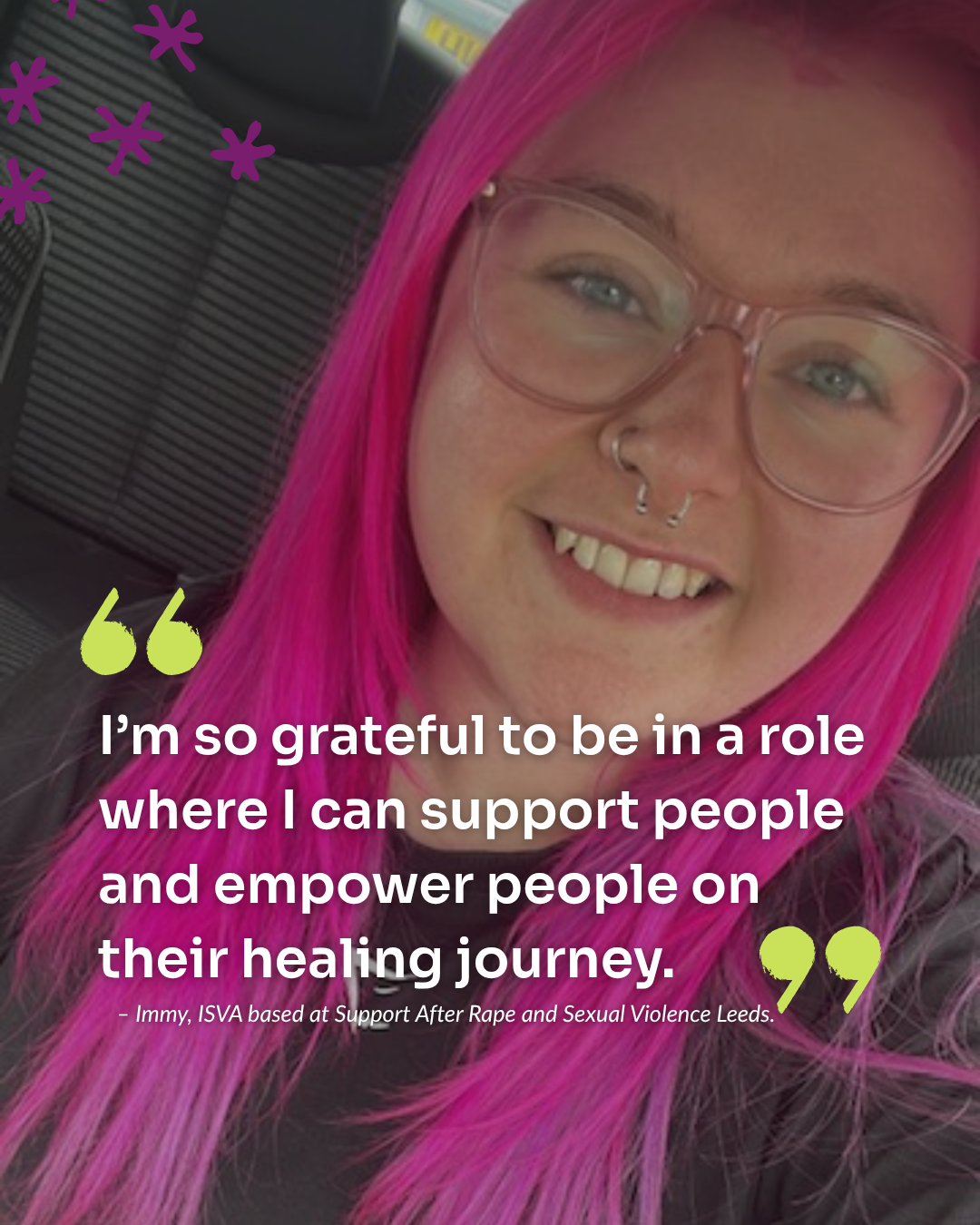
And I’m so grateful to be in a role where I can support people and empower people on their journey and their healing journey.
I think 10-year-old Immy would be like, wow, how do I get to that? She'd just be completely shocked. The thought of it makes me feel emotional. Because you don't ever really kind of take a step back and think about where you are.
I've worked with some survivors for almost seven years, so they would have seen shy 21-year-old me when I was getting my feet into it and then seeing how I am now. They’ve seen me grow as a person too.
18 June 2026