Immy Stopps is an ISVA based at Support After Rape and Sexual Violence Leeds. In this series, she shares her journey of becoming an ISVA.
What's an ISVA?
An Independent Sexual Violence Advocate (ISVA) provides free support for victims and survivors of sexual violence and abuse, who want to report – or are thinking about reporting – to the police. Sometimes ISVAs are also referred to as Independent Sexual Violence Advisers. Read more
How did you become an ISVA?
I became an ISVA by accident, truly.
When I was a kid, I knew I wanted to help people but beyond that I had no idea what that would look like.
I started as a volunteer on the Kirklees, Calderdale and Wakefield Rape and Sexual Abuse Centre helpline for about 9 months, and I got to know one of the ISVAs. She’d chat about her day, and I found it so interesting. I’d ask her a million questions, wanting to know more about how she came into the ISVA role, and learn more about the work she did day-to-day in the criminal justice system.
Before this, I hadn’t even heard of the ISVA role, but I was curious. As my confidence on the helpline grew, I began to wonder if I could become an ISVA too. I’d ask myself, ‘Could I do it?’
If I hadn’t been a volunteer first, I’m not sure I’d have ever applied for it. I would have assumed it was far too intense or people-centred, and it would be too much for me. But after learning so much from the ISVA, it really made me envision myself doing it. And when a role finally came up, I applied for it and got the job.
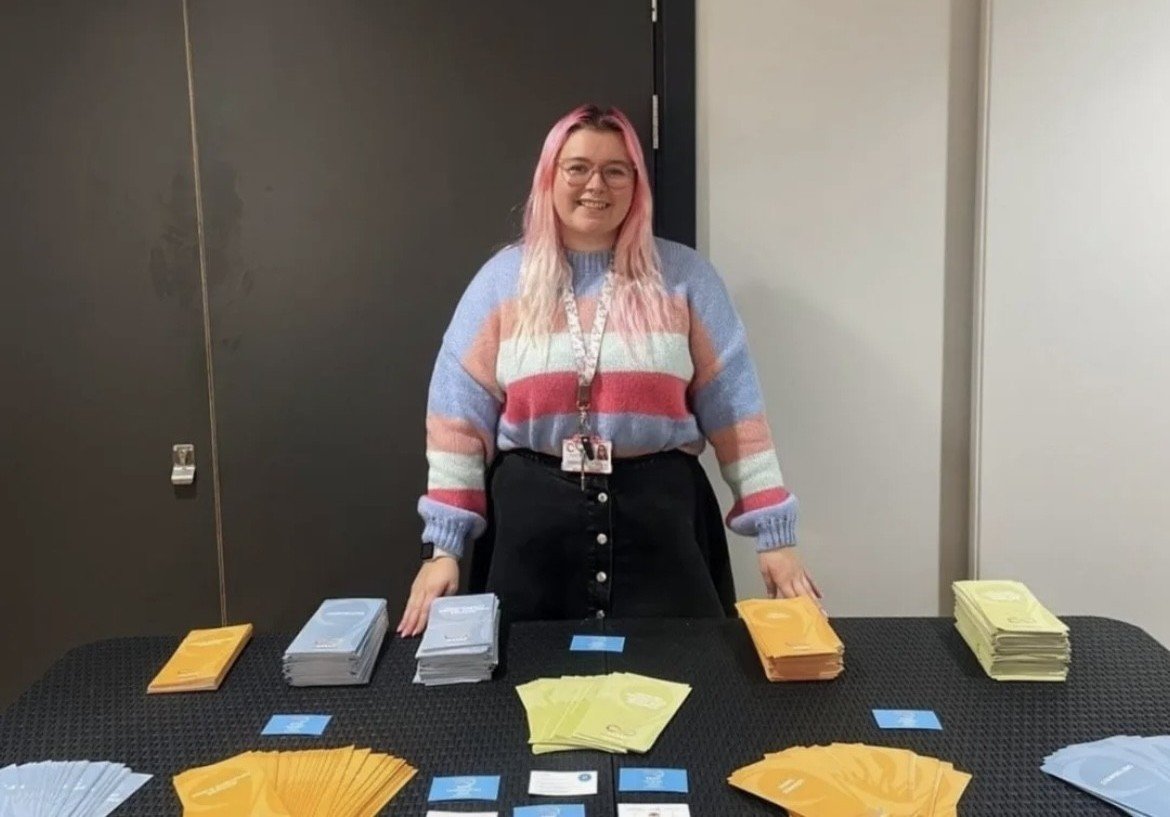
What existing skills did you have?
“Are you listening or are you just waiting for your moment to speak?” Someone said this to me recently and it’s stuck with me. Being an active listener is one of the most important skills to have as an ISVA.
As a kid, I was always nervous, anxious and shy. I hardly spoke. But I was always a good listener, because despite being shy I was always taking everything in. So, the induction to being a helpline volunteer really helped with that, and I took my newfound confidence to my ISVA role.
I’m also a very organised person. I love a list, I’m good at time management, diary management, knowing what’s happening. I use a daily planner alongside my to-do list, and these are practical skills that help me in this role. ISVA manage heavy caseloads and have so many things happening at once, so you need to be able to organise and prioritise your work. Already having this skill has helped me do that part of my role well
I’m also naturally an empathetic person, I feel my own emotions deeply, and I can also feel other people’s emotions too.
What has this role taught you?
One of the biggest learning curves for me has been generally the criminal justice system.
It's so complex, there's so many acronyms and jargon, legal and law changes, operations and research projects, a constant source of activity to keep up with and understand. And once you feel confident with what you know, there’ll be another change to get your head round – but it’s part of the process.
This role has been so good for my confidence too, especially in working with survivors.
I remember starting 8 years ago, feeling nervous in my first meeting with a client, or even when I got my first caseload, I’d go into a separate room to call them because I didn't want people in the office listening to me calling them. I'd sit there for 10 minutes and go through like what I was going to say, because I wanted to get it right the first time.
Now, I don't even think about it. I feel like I've really come into my own as an ISVA. I feel lucky that all my colleagues are so, so supportive. I also started my role on the same day as another ISVA, so we were both supporting each other while we were both learning, and that really helped.
I was already so passionate about this work, and grateful to be given the opportunity to train to become an ISVA. I said to myself “I’m going to go out there and do it and smash it!”
And, not to blow my own trumpet, I feel like I am smashing it.
Misconceptions
People think ISVAs are counsellors, but we’re not. It’s such a niche and unknown role, not many people understand what it is unless they’ve had to need one.
A lot of survivors think they have to share all of the details of what’s happened to them, but it’s not that at all. It comes up often when we initially contact survivors, one of their fears is that they’ve got yet another person to tell everything to. But when you tell them they don’t have to, it’s a huge relief for them.
We also don’t collect evidence. Lots of people assume we’re working with the police and driving around in police cars, a bit like CSI, but’s nothing like that.
Every ISVA works differently. What’s right for one ISVA isn’t necessarily right for another. Even in the way you text a client, or how you speak on the phone or introduce yourself, it will be unique to you and your personality. This is where your own character will come through, and the survivor gets to see that not only are you here to support them, but that you’re human too.
What did ISVA training teach you?
I came into the ISVA role not knowing much at all. I learned about listening skills I’d need, and trauma responses and impacts of sexual violence, from volunteering on the helpline.
The ISVA training taught me about the criminal justice system, which I didn’t know much about before. It also taught me general skills on how to interact with and support survivors day-to-day, how to do this efficiently, which was really useful.
It also taught me about the different forms of sexual violence. I had a bit of an understanding from the helpline, but the training was more detailed and covered the law side of it too.
I’ve mentioned this before, but this training was a big help to my growing confidence in this work. I did the training back in 2018 and it was in-person. It was really beautiful to sit in a room with 9 other people who were also learning how to be an ISVA. A few of the others had already worked in that role for a short time, and some were brand new to it, and we were all learning together.
If 10-year-old Immy saw you now, what would she say?
If younger me looked at older me, she would be so, so proud and completely blown away. In a personal way with my confidence, how I much I’ve grown as a person, but also the fact that I'm in a role as incredible as this one.
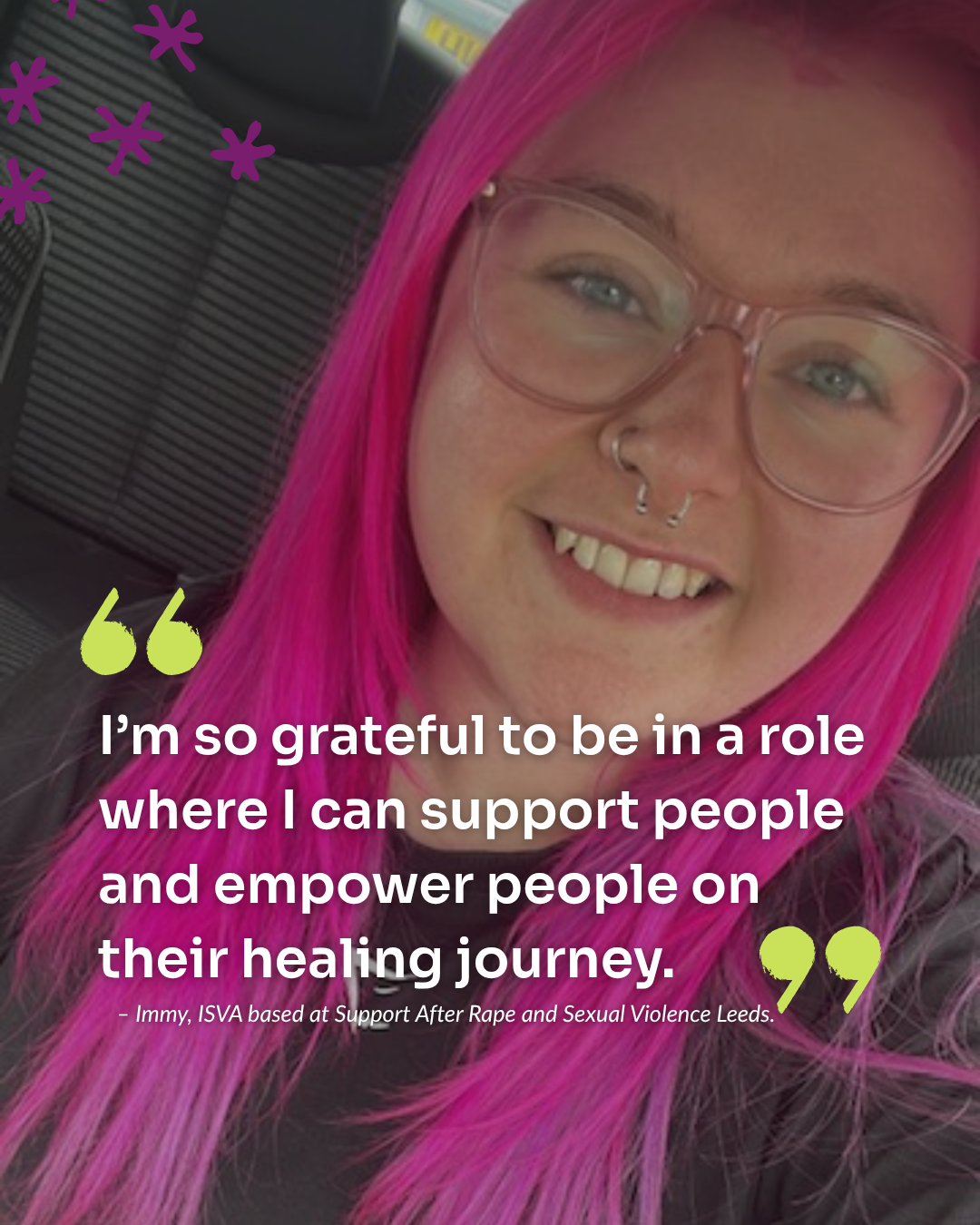
And I’m so grateful to be in a role where I can support people and empower people on their journey and their healing journey.
I think 10-year-old Immy would be like, wow, how do I get to that? She'd just be completely shocked. The thought of it makes me feel emotional. Because you don't ever really kind of take a step back and think about where you are.
I've worked with some survivors for almost seven years, so they would have seen shy 21-year-old me when I was getting my feet into it and then seeing how I am now. They’ve seen me grow as a person too.
What advice would you give to anyone thinking about becoming an ISVA?
Don’t doubt yourself.
If you read the statutory guidance and all the jargon, this will seem like an intimidating role. But if somebody's got the natural skills, which is listening and being empathetic, and the passion for supporting survivors, then everything else can be taught.
Something we say a lot when we're recruiting new people is we can teach people about the criminal justice system. We can teach people about the systems, the Excel spreadsheets and Word documents and all of that.
What we can't teach people is to be empathetic and caring and passionate, you either are or you’re not. So, if you've got those skills, don't doubt your ability to become an ISVA
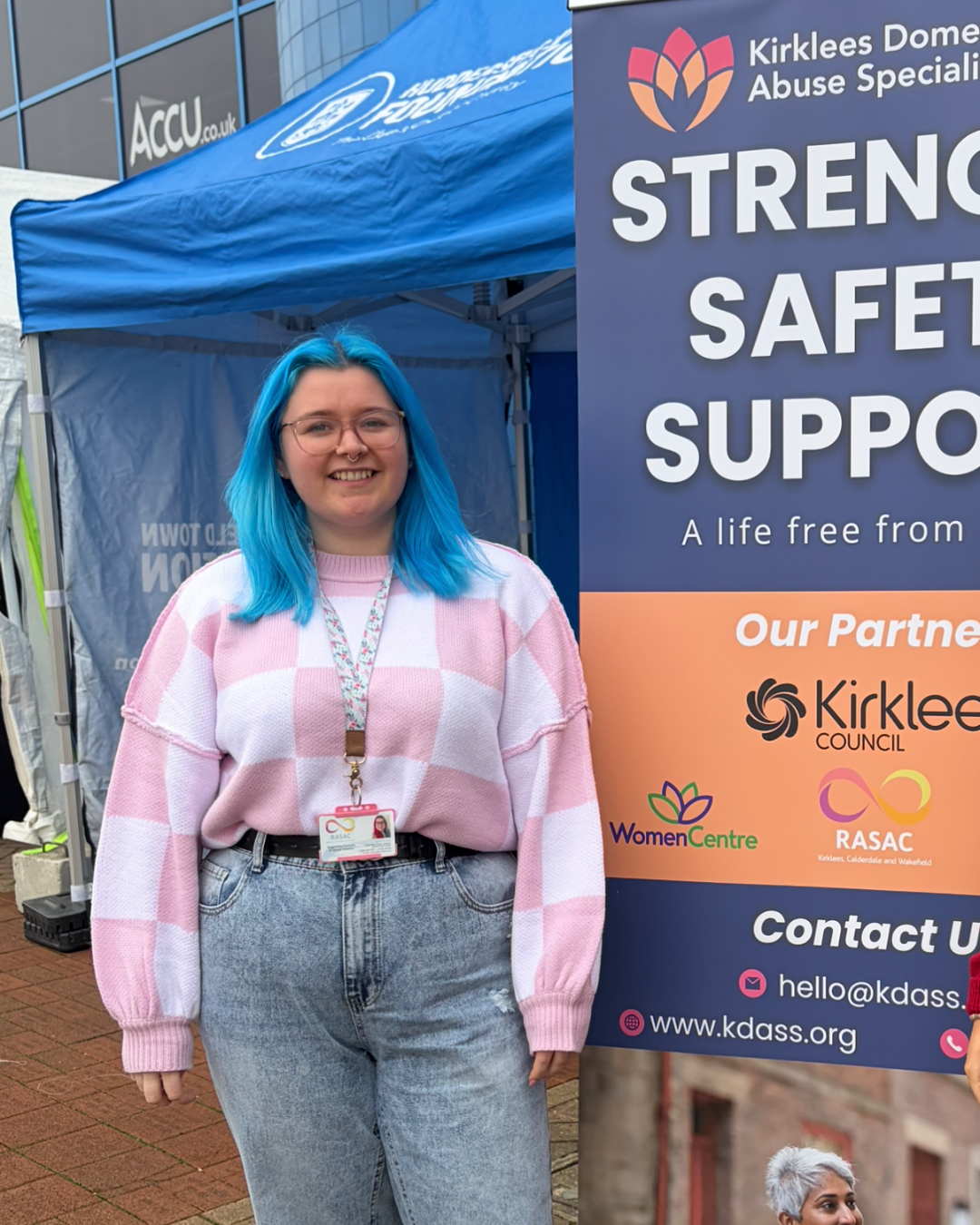
Being an ISVA is the most rewarding role ever.
The relationships that we build with colleagues, other professionals, and with survivors, is just incredible. I feel so lucky to be where I am today.
So, if you’re thinking about going for it, take this as your sign to just do it.
You don’t have to be the most confident person; I wasn’t when I started.
This role helps to improve your confidence, and you see this in your day-to-day work. It is very much a role where you've got to find yourself.
18 June 2026